
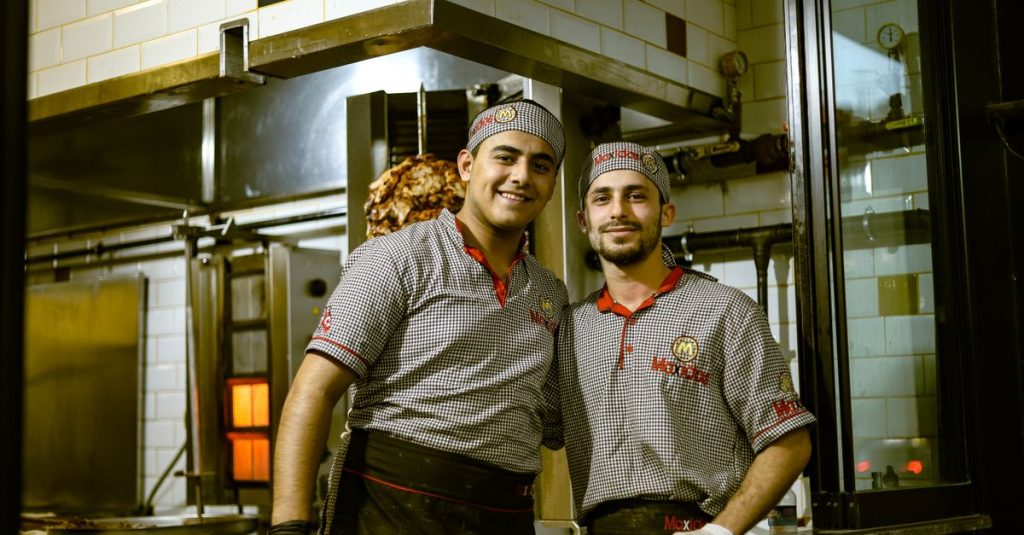
Picture this: It’s peak summer lunchtime. Your best barista, Alex, calls in sick last minute. Your only other barista is already on their day off. The line is out the door, orders are piling up, and your front-of-house staff is swamped because they can only run food, not make coffee. Sound familiar? This kind of chaos isn’t just stressful; it costs you sales and damages your team’s morale.
The solution isn’t hiring more people you might not need year-round or scrambling to find last-minute shift cover. It’s about empowering your existing team to handle multiple roles. This is where cross-training your restaurant staff comes in – making your small cafe or restaurant incredibly flexible, efficient, and ready for anything summer throws at you, from unexpected absences to sudden rushes.
Key Takeaways
- Cross-training makes your team flexible, efficient, and resilient against staff shortages and absences, especially during busy summer months.
- It boosts staff morale and retention by offering growth opportunities and reducing individual stress.
- Implement cross-training in 5 actionable steps: Assess needs, plan training, execute, track progress with tools like Shifty, and incentivize multi-skill employees.
- Start small, focus on key roles, and use existing staff as trainers to build a robust, versatile team.
Why Cross-Train Restaurant Staff, Especially for Summer?
Summer brings unique challenges for cafes and restaurants: increased foot traffic, staff vacation requests, and the inevitable last-minute call-outs. Having multi-skill employees means your operations don’t grind to a halt when one person is unavailable. Imagine Sarah, who runs «The Daily Grind,» a 12-seat cafe in Austin with 6 baristas and 3 kitchen staff. If two of her baristas want to take a week off in July, she needs her remaining team to cover. If one of her kitchen staff can also jump on the espresso machine during a rush, that’s pure gold.
Beyond simply covering shifts, effective employee cross-training helps you:
- **Boost Summer Restaurant Efficiency Tips:** During unexpected rushes, you can quickly reallocate staff to where they’re needed most (e.g., a server can help with food prep, a dishwasher can restock the fridge). This keeps service smooth and wait times down.
- **Reduce Overtime Costs:** Instead of paying overtime to a specialized employee, a cross-trained staff member can fill in at their regular rate, minimizing extra expenses.
- **Improve Team Morale & Retention:** Offering opportunities for staff to learn new skills makes their jobs more interesting, reduces burnout, and shows you’re investing in their development. This is huge for keeping good people around.
- **Enhance Customer Experience:** With a more flexible staff small cafe, your team can respond faster to customer needs, whether it’s quickly clearing tables or taking extra orders.
Ready to build a super-flexible, multi-skill employees restaurant team? Let’s dive into a practical, 5-step employee cross-training guide.
Step 1: Identify Key Roles & Training Gaps (The «Who Needs to Learn What?»)
Before you start assigning training, you need to understand where your vulnerabilities are. Think about your core roles and the tasks absolutely critical to your daily operations. For a cafe, this might be barista, cashier, and basic food prep. For a restaurant, it could be server, host, dishwasher, line cook (basic tasks), and bartender (basic mixing).
Actionable Tip: Map Your Skills & Bottlenecks
- **List Every Role & Key Task:** Write down all the major roles in your cafe/restaurant. For each role, list the 3-5 most critical tasks.
- *Example Role: Barista*
- Task 1: Espresso machine operation & drink making
- Task 2: Cash register & order taking
- Task 3: Basic cleaning & stocking
- *Example Role: Server*
- Task 1: Order taking & POS system
- Task 2: Food & drink delivery
- Task 3: Table clearing & resetting
- *Example Role: Barista*
- **Assess Your Team:** Go through your current staff roster. For each employee, note their primary role and any secondary skills they already possess.
- **Pinpoint Single Points of Failure:** Who is the *only* person who can do X? What happens if they call in sick? These are your priority cross-training areas. For instance, if only one person knows how to set up the POS system or handle the opening cash float, that’s a big risk.
- **Identify High-Impact Training:** Which roles, if cross-trained, would have the biggest positive impact on your summer restaurant efficiency? Often, it’s roles that are frequently busy or have a high turnover.
Skill Matrix Example: «The Corner Bistro» (15 Employees)
Here’s how John, the manager of «The Corner Bistro,» mapped out his team’s skills to plan for summer:
| Employee Name | Primary Role | Current Secondary Skills | Cross-Training Goal (Summer) | Priority |
|---|---|---|---|---|
| Maria | Lead Server | Host, Bartender (basic) | Basic Expediting | High |
| David | Line Cook | Prep Cook | Dishwasher, Inventory Check | Medium |
| Chloe | Host | Table Busser | Cashier, Basic Server Support | High |
| Sam | Bartender | Server (limited) | Opening/Closing Procedures, Basic Food Prep | Medium |
| Leo | Dishwasher | None | Food Prep Assistant, Stocking | High |
Step 2: Create a Structured Employee Cross-Training Guide & Plan
Once you know *who* needs to learn *what*, you need a clear roadmap for how that learning will happen. Don’t just throw people into a new role and hope for the best.
Actionable Tip: Design a Practical Training Schedule
- **Define Learning Objectives:** For each new skill, clearly state what the employee should be able to *do* after training. «Understand how to make a latte» isn’t enough; «Independently prepare all espresso-based drinks on the menu to standard» is better.
- **Break Down Skills:** Most tasks aren’t one big thing. Break them into smaller, manageable steps. A daily opening or closing checklist can be an excellent resource here.
- **Assign Trainers:** Who on your current team is excellent at a particular skill and good at teaching? Empower them to train their peers. This boosts their confidence and leadership skills too.
- **Schedule Dedicated Training Time:** Don’t expect staff to learn new skills during peak hours. Schedule specific, paid time for training. Even 1-2 hours of focused training per week, during slower shifts or before/after opening, makes a huge difference.
- **Utilize Onboarding Checklists:** If you’re training for a role you frequently hire for, adapt your existing onboarding checklist template. It provides a structured path for new skills too.
Step 3: Implement the Training (Hands-On & Support)
This is where the rubber meets the road. Focus on practical, hands-on learning, not just theoretical explanations.
Actionable Tip: Get Hands-On & Provide Feedback
- **Shadowing & Observation:** Start with employees shadowing experienced staff. They observe the flow, questions, and problem-solving in real-time.
- **Guided Practice:** After observing, let them try with supervision. For a barista, this means making drinks with an experienced barista right there to correct technique and offer tips. For a server learning expediting, it means guiding them through the first few orders.
- **Small Steps, Big Wins:** Don’t overwhelm them. Start with simpler tasks within the new role. A server learning kitchen prep might start with washing vegetables before moving to chopping or plating.
- **Encourage Questions:** Create a safe environment where staff feel comfortable asking «dumb» questions. Mistakes are learning opportunities.
- **Consistent Feedback:** Provide immediate, constructive feedback. Highlight what they did well and offer specific suggestions for improvement.
Step 4: Track Progress & Schedule Smartly with Flexible Staff Small Cafe
Training isn’t a one-and-done deal. You need to track who’s learned what and then leverage those new skills in your scheduling for maximum summer restaurant efficiency.
Actionable Tip: Use a Skill Tracker & Smart Scheduling
- **Skill Tracking Sheet:** Maintain a simple spreadsheet or a dedicated section in your staff profiles that lists each employee and the skills they’ve mastered (or are in progress). This helps you see your team’s overall capabilities at a glance.
- **Gradual Skill Integration:** Once an employee is proficient in a new skill, start giving them opportunities to use it. Don’t immediately throw them into a full shift in a new role. Maybe an hour of bar backing for a server during a slow period, or 30 minutes on the register for a barista.
- **Strategic Scheduling:** When you’re building your summer schedule, intentionally roster employees who can cover multiple roles. If you know John can be a barista AND a cashier, you have more options if someone calls in. Use a free shift scheduling app to easily see who’s available and what skills they have.
- **Regular Check-ins:** Periodically check in with cross-trained staff to ensure they retain their new skills and feel comfortable.
Schedule Your Multi-Skill Employees with Ease
Leverage your cross-trained team effectively. Shifty helps you see staff availability, manage time-off requests, and build schedules that make the most of your multi-skill employees. Available on iOS, Android, and Web. Free trial available.
Step 5: Incentivize & Maintain Momentum for Multi-Skill Employees Restaurant
Why should an employee go the extra mile to learn a new skill? Beyond making their job more interesting, there needs to be a clear benefit for them. This is crucial for long-term success of your employee cross-training guide.
Actionable Tip: Reward & Recognize
- **Recognition:** Publicly acknowledge staff who successfully complete cross-training. A simple shout-out during a staff meeting or on your internal communication channel goes a long way.
- **Increased Hours/Better Shifts:** For many hourly employees, more hours means more money. Being able to work multiple roles often means you can give them more shifts, especially when you need to cover employee vacations. This is a powerful incentive.
- **Skill-Based Pay (Consideration):** While not always feasible for every role, consider a small hourly bump for mastering a critical second (or third) skill. Even an extra $0.50 or $1 per hour for a certified «multi-skill» employee can be a strong motivator.
- **Opportunities for Advancement:** Frame cross-training as a path to leadership. An employee who understands multiple facets of the business is a prime candidate for a shift lead or assistant manager role.
- **Continuous Learning Culture:** Make cross-training an ongoing part of your staff development, not a one-time project. Regularly identify new areas for growth.
Implementing an effective employee cross-training guide will transform your team from a collection of specialists into a versatile, resilient force. This summer, you won’t just survive the rush – you’ll thrive.
Frequently Asked Questions
What are the biggest benefits of cross-training restaurant staff?
The biggest benefits include significantly improved operational flexibility (especially for covering absences or rushes), increased efficiency, reduced labor costs (by minimizing overtime), enhanced staff morale and retention through growth opportunities, and a better customer experience due to smoother service.
How long does it typically take to cross-train an employee for a new role?
The duration varies greatly depending on the complexity of the new role and the employee’s existing skills. Simple tasks like basic cashiering or table bussing might take a few hours of focused training. More complex roles like basic bartending or line expediting could take 10-20 hours of supervised practice spread over a few weeks. The key is consistent, structured training, not rushing the process.
Should I pay employees more for being multi-skilled?
While not always mandatory, offering a small pay bump (e.g., $0.50-$1.00 per hour) for mastering a significant new skill is a powerful incentive and an excellent way to show appreciation. If a direct pay increase isn’t feasible, consider other incentives like more consistent hours, priority for desired shifts, or clearer paths to leadership roles. Recognition and genuine investment in their development also go a long way.
What if an employee resists cross-training?
Start by understanding their resistance – is it fear of failure, feeling overwhelmed, or disinterest? Explain the personal benefits (skill development, more hours, career growth) and how it helps the whole team. Start with small, non-intimidating tasks, offer plenty of support, and assign a friendly, patient trainer. If resistance continues, it might indicate a broader engagement issue, or simply that the specific cross-training isn’t a good fit for that individual.
By investing in an employee cross-training guide, you’re not just preparing for summer; you’re building a more robust, engaged, and resilient team that can tackle any challenge, year-round.