
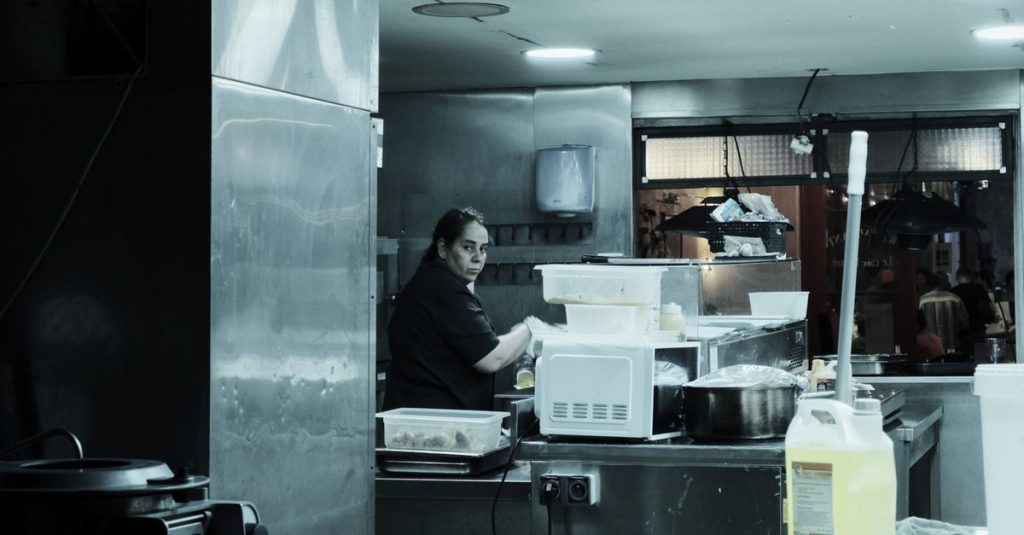
You walk into your cafe 10 minutes before opening, coffee machine already humming, and there’s your head barista, Leo, dialing in the espresso. He’s not clocked in yet. Or maybe you’ve just finished a mandatory team meeting about motivating seasonal staff, and your server, Chloe, asks, «Hey, do we get paid for that?»
These are common scenarios for busy cafe and restaurant managers. The short answer to whether you have to pay staff for pre-shift prep, post-shift cleanup, or mandatory meetings is almost always a resounding YES. Getting this wrong can lead to costly employee turnover, hefty fines, and serious headaches for your small business. Let’s break down the wage law guide for restaurant employee paid time rules.
Key Takeaways
- Almost all «off-the-clock» work is compensable. If an employee is performing a task for your business, they must be paid, even if they haven’t officially clocked in or out.
- Mandatory meetings and training are always paid time. This isn’t optional, regardless of duration.
- Accurate time tracking is your best defense. Use a reliable system to ensure all work time is recorded and paid.
- Ignorance is not a valid defense. Federal (FLSA) and state wage and hour compliance laws apply to all employers, regardless of size.
The Bottom Line: When Do You Have to Pay for Off-the-Clock Work?
The core principle under the Fair Labor Standards Act (FLSA), the federal law governing wages and hours, is simple: if an employee is «suffered or permitted to work,» they must be paid for that time. This means if you know or have reason to know an employee is working, you have to pay them, even if you didn’t explicitly ask them to or if they chose to do it outside their scheduled shift.
Think about Pedro, who owns a popular 25-seat bar. His bartender, Maya, often comes in 15 minutes early to clean the bar top, restock liquor, and slice garnishes. If Pedro sees her doing this, he must pay her for those 15 minutes, even if she «volunteered» to do it or if he hasn’t officially opened the till for her to clock in.
What Counts as «Work»? The De Minimis Rule and Practical Examples
Work isn’t just serving customers. It includes any activity an employee performs for the benefit of the employer. This could be:
- Setting up equipment (espresso machine, blenders, POS system).
- Prepping ingredients (chopping vegetables, making coffee syrups).
- Cleaning and sanitizing workspaces.
- Counting inventory or checking deliveries.
- Putting on or taking off required uniforms or safety gear if it’s a significant activity.
- Reading work-related emails or checking schedules from home (if mandatory).
There’s a very narrow exception called the «de minimis rule.» This applies to brief, insignificant periods of time that are administratively difficult to record. We’re talking about a few seconds or a minute here and there, like a server waiting 30 seconds for the POS system to load. However, the Department of Labor (DOL) has made it clear that regular, recurring tasks, even if only 5-10 minutes each day, are generally NOT de minimis and must be paid. Don’t rely on this rule to avoid paying for consistent unpaid pre-shift pay cafe tasks.
Mandatory Meetings and Training: Always Paid Time
This is non-negotiable. If you require employees to attend a meeting (e.g., discussing new menu items, reviewing health inspection protocols, or a seasonal staff kick-off), a training session, or even a disciplinary meeting, that time must be paid. It’s considered hours worked. This applies even if the meeting is short or held outside their regular shift. For Sarah, who runs a 12-seat cafe in Austin with 6 baristas, scheduling a 30-minute monthly staff meeting means paying all attendees for those 30 minutes, plus any applicable overtime if it pushes their total hours over 40 for the week.
Common Off-the-Clock Scenarios in Your Cafe or Restaurant
Let’s look at some typical situations you might encounter and the legal requirements for off-the-clock work laws restaurant owners.
| Scenario | Legal Requirement (FLSA) | Actionable Steps for Your Business |
|---|---|---|
| Pre-Shift Prep: Barista sets up espresso machine 10 min before clocking in. | Must be paid. This is «work performed.» | Require staff to clock in before starting any prep. Adjust schedules or assign prep tasks to already-clocked-in staff. |
| Post-Shift Cleanup: Server wipes down tables, reconciles cash for 15 min after clocking out. | Must be paid. Any work after clocking out is still work. | Ensure staff clock out after all duties are complete. Train managers to monitor this. |
| Mandatory Staff Meeting: All staff attend a 1-hour session on a new menu. | Must be paid. This is «hours worked.» | Schedule meetings during paid shifts or pay separately for attendance. Factor meeting time into weekly hours for overtime calculations. |
| «Voluntary» Training: Employee attends an online safety training module at home. | Must be paid if mandatory. If voluntary and not work-related or outside work hours, *may* not be paid. Best to always pay for professional development. | Clearly define if training is truly voluntary. If it benefits your business or is required for the job, pay for it. |
| Checking Schedules/Messages: Staff check work schedule app or team chat from home. | Paid if mandatory or significant time. Brief, optional checks likely not paid. | Set clear policies. Use a scheduling app like Shifty that allows easy access without requiring «work» to check schedules. Consider a small stipend if truly mandatory. |
| Waiting Time: Server waits for a late customer at closing, or for a delivery. | Must be paid. If an employee is «engaged to wait» (cannot use time for personal activities), it’s paid. | Minimize waiting time. If unavoidable, ensure staff are clocked in. |
The Real Cost of Non-Compliance: Why Wage and Hour Compliance Matters
Ignoring wage and hour compliance horeca isn’t just about cutting corners; it’s a huge risk. The financial implications can be devastating for a small business. Here’s what you could face:
- Back Wages: You’ll have to pay all unpaid wages, sometimes going back several years.
- Liquidated Damages: In many cases, you’ll owe an additional amount equal to the back wages (double damages).
- Civil Penalties: Fines imposed by federal or state labor departments.
- Legal Fees: Employee lawsuits for unpaid wages can result in significant attorney fees, yours and potentially the employee’s.
- Reputational Damage: News of unpaid wages spreads fast, especially in local communities. This can hurt your ability to attract good staff and customers.
- Low Morale & High Turnover: Unfair pay practices breed resentment. Staff who feel exploited are more likely to leave, costing you more in recruitment and training. This ties directly into keeping staff motivated.
Imagine Leo’s 10 minutes of unpaid prep each day. Over a year, that’s 50 hours per employee. For a cafe with 6 baristas, that’s 300 hours of unpaid work annually. At $15/hour, that’s $4,500 in back wages, potentially $9,000 with liquidated damages, plus fines and legal fees. It’s a preventable disaster.
Streamline Time Tracking & Avoid Wage Violations
Accurate time tracking is crucial for wage and hour compliance. Shifty helps you easily schedule shifts and track employee clock-ins and clock-outs, ensuring every minute worked is recorded and paid correctly. Available on iOS, Android, and Web. Free trial available.
Protecting Your Business: Practical Steps for Restaurant Employee Paid Time Rules
Ensuring you comply with restaurant employee paid time rules doesn’t have to be complicated. Here’s how to safeguard your business:
- Implement Clear Policies:
- State explicitly in your employee handbook that all work time must be recorded.
- Define what constitutes «work» in your establishment (e.g., «clock in before touching any equipment or beginning prep»).
- Train new hires on timekeeping procedures from day one.
- Use a Reliable Time Tracking System:
- Digital systems like Shifty make it easy for employees to clock in and out accurately.
- Ensure employees can only clock in and out from approved devices or locations (e.g., using geo-fencing if available).
- Regularly review time sheets for discrepancies.
- Train Your Managers:
- Your shift supervisors and managers are your first line of defense. They must understand these rules and enforce them.
- Train them to watch for employees working before clocking in or after clocking out.
- Empower them to send employees home if they are working off-the-clock without approval, after ensuring their shift duties are covered.
- Communicate with Staff:
- Reinforce the policy that employees should NEVER work off the clock.
- Explain that this policy protects both the employee (ensuring they’re paid) and the business (ensuring compliance).
- Encourage staff to report any instances where they feel they are working unpaid.
- Audit Regularly:
- Periodically review timekeeping records against schedules. Are employees consistently clocking in early or out late?
- Conduct «spot checks» to ensure compliance. Just like a health inspection checklist, having a compliance checklist can save you.
State vs. Federal Laws: A Quick Note on Wage Laws Restaurant
While the FLSA sets the federal baseline for off-the-clock work laws restaurant businesses must follow, many states have their own, often stricter, wage and hour laws. For instance, some states require daily overtime or specific break policies. Always comply with whichever law provides greater protection or benefits to the employee. It’s smart to consult with a local labor law attorney to ensure you’re fully compliant with both federal and state regulations in your specific area.
Frequently Asked Questions
What is the de minimis rule for unpaid pre-shift pay cafe?
The de minimis rule allows employers not to pay for very short, infrequent, and administratively impractical periods of work (e.g., a few seconds). However, for recurring pre-shift tasks like setting up equipment or prepping, even if they only take 5-10 minutes regularly, the Department of Labor generally considers these compensable and not «de minimis.» It’s risky to rely on this rule for consistent tasks.
Do I have to pay for an employee to change into uniform?
Generally, no, if it’s a simple uniform (like a t-shirt or apron) that can be changed into quickly at home. However, if the uniform requires a significant amount of time to put on or take off (e.g., specialized protective gear) or if changing must occur on the employer’s premises, that time may be compensable. It’s always best practice to have employees clock in before any work-related activity begins, including changing if it’s substantial or required on-site.
How long do I need to keep timekeeping records?
Under the FLSA, you must keep payroll records, including timekeeping records, for at least three years. Records on which wage computations are based (like time cards) must be kept for two years. However, many states have longer requirements, so it’s always best to check your state’s specific laws and err on the side of caution, often keeping records for 4-7 years.
Can an employee waive their right to be paid for off-the-clock work?
No. Employees cannot legally waive their right to be paid for all hours worked under the FLSA. Any agreement by an employee to work off the clock without pay is generally unenforceable and does not protect the employer from liability. This applies even if the employee insists they don’t want to be paid for extra time.
Navigating wage and hour compliance doesn’t have to be a minefield. By understanding the rules and implementing clear, consistent policies, you can protect your cafe or restaurant and ensure your staff are paid fairly for every minute they work.